
Kalamazoo County Circuit Court Overview
The Circuit Court is Michigan's court of general jurisdiction. In Kalamazoo County that role belongs to the 9th Circuit Court, which handles felony criminal cases, civil suits above the district court money limit, family matters, juvenile cases, and appeals that come up from the lower courts. It is the trial court where the largest and most complex disputes in the county are decided. When a case is too serious for the district bench, it lands here.
The Circuit Court does not stand alone. It works alongside the 8th District Court and the Probate Court, and the three courts share buildings, staff, and case-transfer pathways. Most felony cases actually start in the district court and then move up to the Circuit Court for trial. Civil claims sort by dollar amount and subject, and family and juvenile files sit in a dedicated division. Understanding this split is the first step in any Kalamazoo County court records search.
The Circuit Court hears the felony side of the county's caseload, so many of the records readers look for begin at this level after a lower-court start. A quick look at the 9th Circuit's official profile helps set the stage; the county publishes its mission and jurisdiction on the 9th Circuit Court page. The image below shows how the circuit level presents its role to the public.
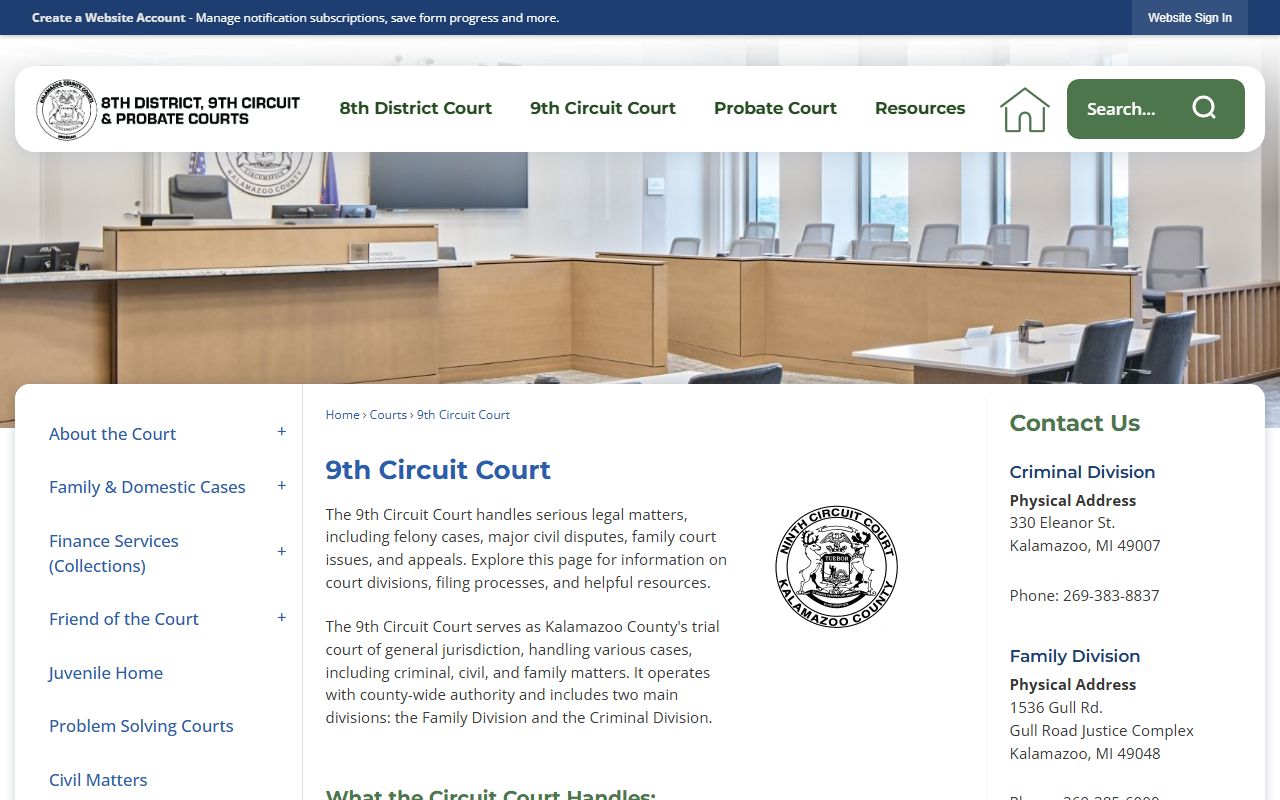
That overview names the general subject areas the Circuit Court keeps, from felony prosecutions to appeals. It is a useful starting reference before you decide which clerk window or online tool fits your search.
List of Kalamazoo County Trial Courts
Kalamazoo County runs three trial courts under one county umbrella, each with its own subject areas and its own division structure. The Circuit Court carries the felony, higher-civil, and family docket. The District Court carries misdemeanors, preliminary felony work, lower civil claims, and traffic. The Probate Court carries estates, guardianships, and mental-health matters, and since 2025 it also hosts the merged Civil/Probate Division. The table lists each court with its main location and public phone line.
| Court | Type / Jurisdiction | Address | Phone |
|---|---|---|---|
| 9th Circuit Court | Felonies, higher civil, family, juvenile, appeals | 330 Eleanor St., Kalamazoo, MI 49007 (family at 1536 Gull Rd.) | 269-384-8171 |
| 8th District Court | Misdemeanors, preliminary felony exams, lower civil, traffic | 330 Eleanor St., Kalamazoo, MI 49007 | 269-384-8171 |
| Probate Court | Estates, guardianships, conservatorships, mental health, Civil/Probate Division | 1536 Gull Rd., Kalamazoo, MI 49048 | 269-383-8666 |
The 8th District Court and the 9th Circuit Court both operate out of the Judge Charles A. Pratt Justice Center at 330 Eleanor Street. Family and probate functions run from the Gull Road Justice Complex a few miles away. The 8th District Court is the lower court in this stack, and it is where most criminal matters and traffic tickets are first handled before any bindover to the Circuit Court.
To see how the county frames the district level that feeds the Circuit Court, review the 8th District Court page. The screenshot that follows captures that court's public entry point.
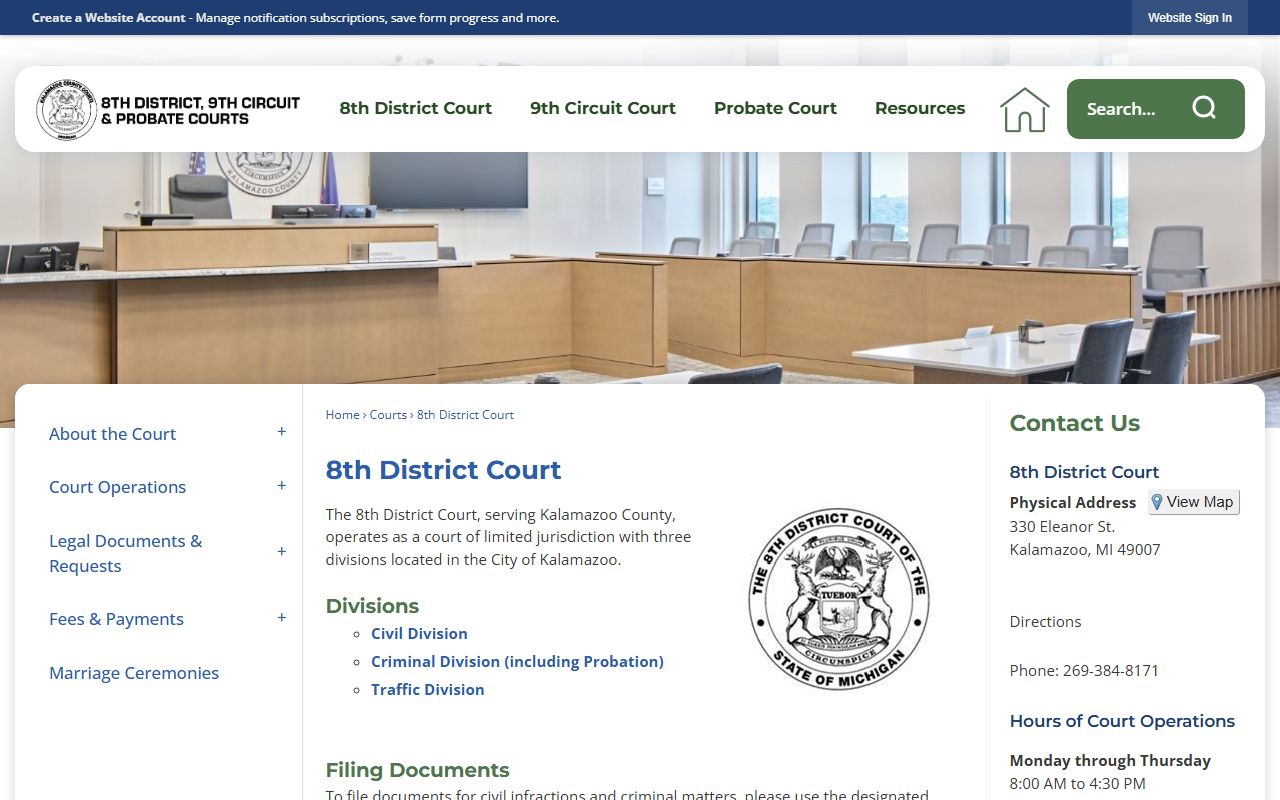
The district page lists filing rules, hours, and case-search links. It is the practical door for arraignments, misdemeanor files, and the preliminary felony hearings that decide whether a case moves up to the Circuit Court.
Circuit Court vs District Court vs Probate Court
Michigan does not use a County Court or a Justice of the Peace court. Instead the trial work splits three ways among the Circuit Court, the District Court, and the Probate Court. The Circuit Court takes the heavy end. The District Court takes the lighter criminal and civil load. The Probate Court takes estates and protective matters. The table sets the three side by side so you can pick the right venue before you search.
| Circuit Court (9th) | District Court (8th) | Probate Court | |
|---|---|---|---|
| Civil Reach | Higher-dollar and divested civil claims | Lower-dollar civil and small claims | Estate, trust, and protective matters |
| Criminal Jurisdiction | Felony trials and sentencing | Misdemeanors and preliminary felony exams | None (non-criminal court) |
| Family Cases | Yes, through the Family Division | No | Guardianship and mental-health hearings |
| Appeals | Hears appeals from lower courts | Appealed up to Circuit Court | Appealed up to Circuit Court |
The clearest rule of thumb is severity. Felonies and larger civil suits belong to the Circuit Court, misdemeanors and traffic belong to the District Court, and anything about a will, an estate, a guardianship, or a commitment belongs to the Probate Court. Family and juvenile cases sit inside the Circuit Court's Family Division. Because the three courts overlap in one county and even share the same phone line at the Pratt Center, residents often confuse them, so venue should be confirmed before you request a file.
How a Case Moves Through Kalamazoo County Courts
A criminal case rarely opens in the Circuit Court. It starts with an arrest, moves to the 8th District Court for arraignment, and only reaches the 9th Circuit Court after a preliminary examination decides there is enough evidence to send it up. That transfer is called a bindover. Once bound over, the felony case is tried and sentenced at the Circuit level, and any further challenge goes to the state appeals court.
Criminal flow: Arrest › 8th District Court Arraignment › Preliminary Examination › Bindover to 9th Circuit Court › Trial › Sentencing › Michigan Court of Appeals
Civil flow: Complaint Filed › Answer › Discovery › Motions › Trial or Settlement › Judgment › Michigan Court of Appeals
Civil cases follow a different track. A plaintiff files a complaint in the court that fits the dollar amount, the defendant answers, and the parties exchange information during discovery. Larger claims run in the Circuit Court, while lower-dollar disputes stay in the District Court. Whichever court hears the case, the losing side can ask the Michigan Court of Appeals to review the outcome. Docket entries mark each of these steps, and the sequence appears in the Kalamazoo County court dockets for a given case number.
Note: A felony that is not bound over at the preliminary examination can be dismissed or reduced, so the same defendant may end up with only a district court record.
Kalamazoo County Circuit Court Divisions
The Circuit Court organizes its work into divisions so that judges and staff can specialize. The Criminal Division handles felony prosecutions, from bindover through trial and sentencing, and it coordinates with the county prosecutor and the probation office. The Civil Division hears higher-dollar money disputes, injunctions, and appeals from the lower courts. The Family Division carries divorce, custody, support, child protection, and juvenile delinquency cases, and it operates in part from the Gull Road Justice Complex.
After the 2025 reorganization, the county's civil work was rehomed alongside the Probate Court to form a combined Civil/Probate Division. That shift changed where some filings physically live and which clerk staff manage them, so a civil matter and a probate matter may now share a contact window. The Family Division continues to run juvenile and domestic-relations cases, with support and protective proceedings tied into the same office. Each division keeps its own records, which is why a court records search often depends on knowing the division as well as the court.
Judges and court officers are mapped by division on the county's rolls. The county publishes its circuit and probate bench on the Judges page, which is helpful when you need to match a judge to a case. The image below shows that judicial listing.
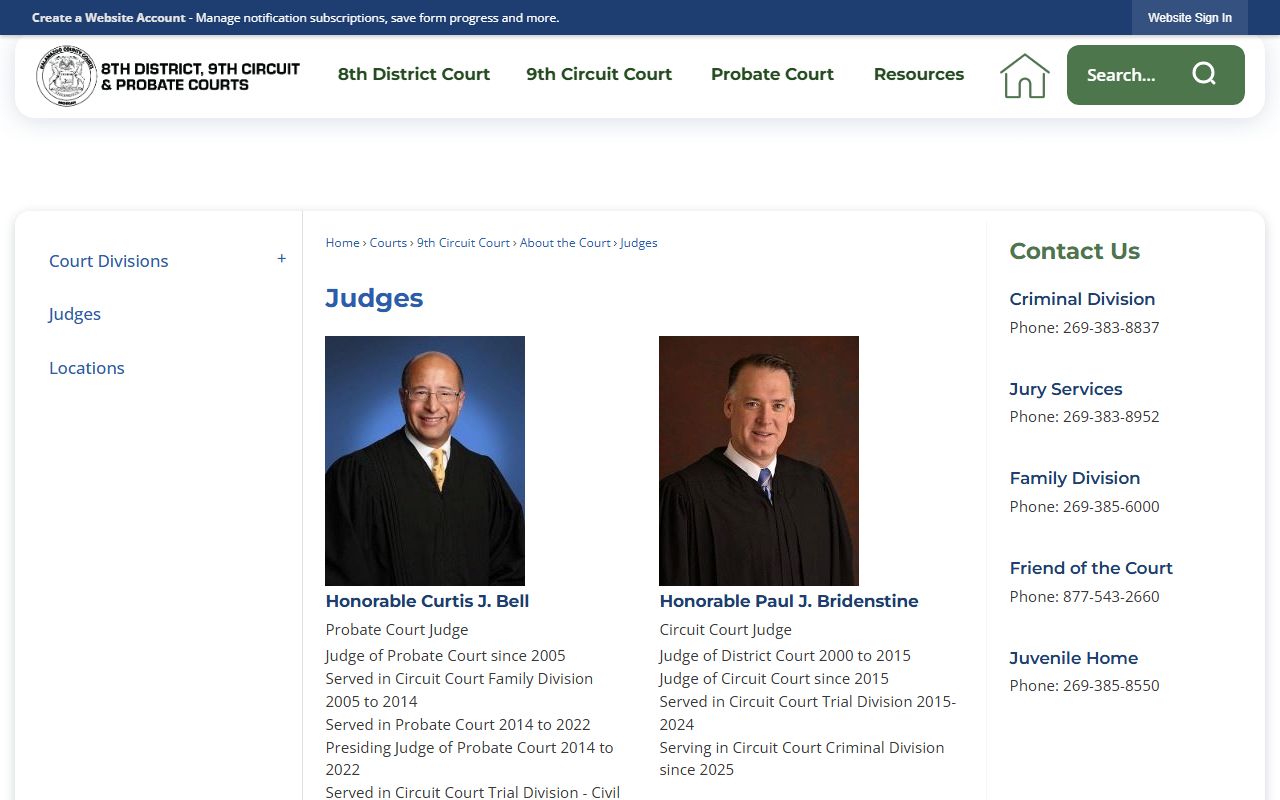
That roster identifies the judges assigned across the circuit and probate benches. Pairing a judge with a division helps confirm where a file is held before you contact a clerk.
Kalamazoo County and the 9th Judicial Circuit
Michigan groups its circuit courts by numbered judicial circuits, and Kalamazoo County is served by the 9th Circuit. The circuit is the trial forum for felonies, divested civil claims, and family cases across the county, and it also functions as the first stop for appeals coming up from the district and probate benches. Because the circuit covers the full county, its judges rotate through criminal, civil, and family assignments rather than sitting in a single narrow lane.
The 9th Circuit shares the Pratt Justice Center with the 8th District Court and coordinates closely with the Probate Court's Civil/Probate Division. Front-office court functions at 330 Eleanor Street run on the county's main court line, while family and juvenile matters route through separate contacts at the Gull Road complex. This layout means a single case can involve more than one building, so confirming the assigned division and location saves a wasted trip.
Note: The Circuit Court reviews appeals from the District and Probate courts, but its own decisions are appealed to the Michigan Court of Appeals rather than reheard in the county.
Magistrates and Kalamazoo County Lower Courts
Not every hearing in the county is run by a circuit judge. District court magistrates handle preliminary matters such as setting bond, issuing certain warrants, arraigning defendants, and processing informal traffic hearings. In the family and juvenile setting, referees conduct hearings and make recommendations that a circuit judge then reviews. These officers keep the courts moving and take pressure off the trial bench for routine steps.
The county lists its magistrates and referees on official rolls that map each officer to a role. The Judges, Magistrate, and Referees page details the district-level officers, and the screenshot below captures that listing.
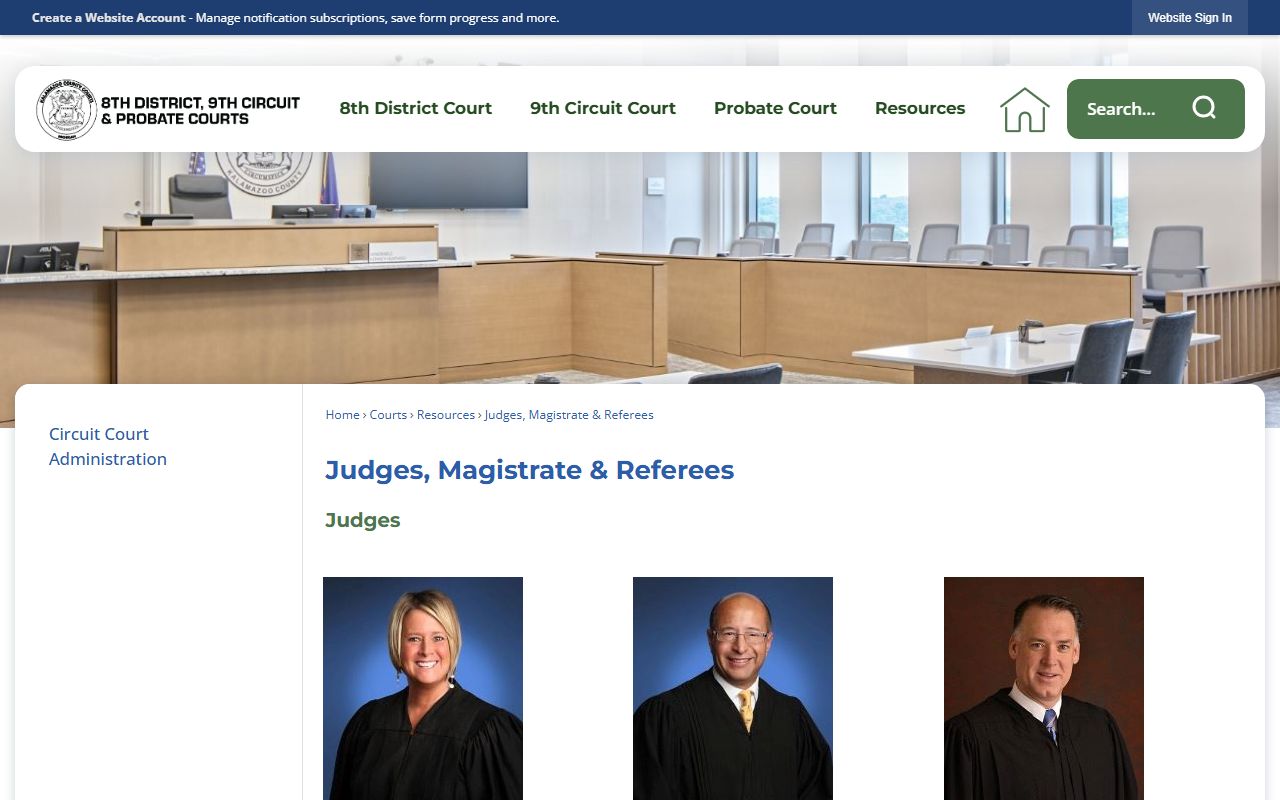
That page separates the judicial officers who handle preliminary and referral work from the trial judges. A broader roster of court leadership sits on the Judges, Magistrates, and Administrators page, which also names the court administrators who oversee daily operations. The following image shows that combined administrative listing.
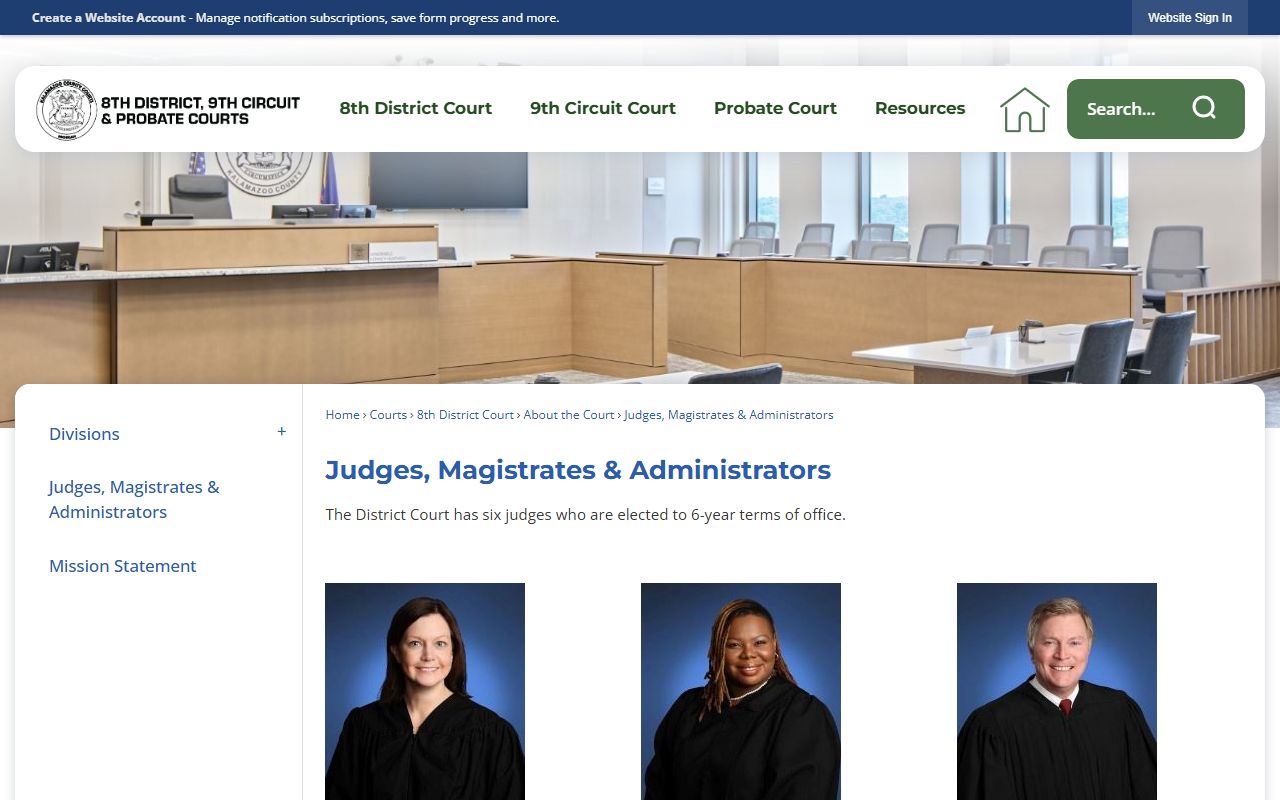
Administrators manage scheduling, records, and staffing across the courts, so their contacts are useful when a request crosses more than one division. Michigan has no standalone justice or municipal trial court consolidating these functions in Kalamazoo County, so the district magistrate handles the low-level work other states assign to a JP court.
Kalamazoo County Circuit Court History
The county's trial structure took its modern shape through Michigan's court reforms of the late 1960s, which folded older municipal and justice courts into the district system and set the present split between district and circuit work. Over the following decades the 8th District Court grew into a six-judge bench, and district restructuring in the late 1990s reorganized how the county assigned cases.
Two recent milestones reshaped where the courts sit and how they divide work. In December 2023 the District Court moved into the Judge Charles A. Pratt Justice Center at 330 Eleanor Street, consolidating criminal, family, and specialty functions with the Circuit Court. Then in 2025 the county merged the Circuit Court's civil work into a combined Civil/Probate Division based at the Gull Road complex, changing which office holds civil and probate filings.
These moves are documented in the county's court-history material. The District Court History page traces the structural changes, and the image below shows that timeline.
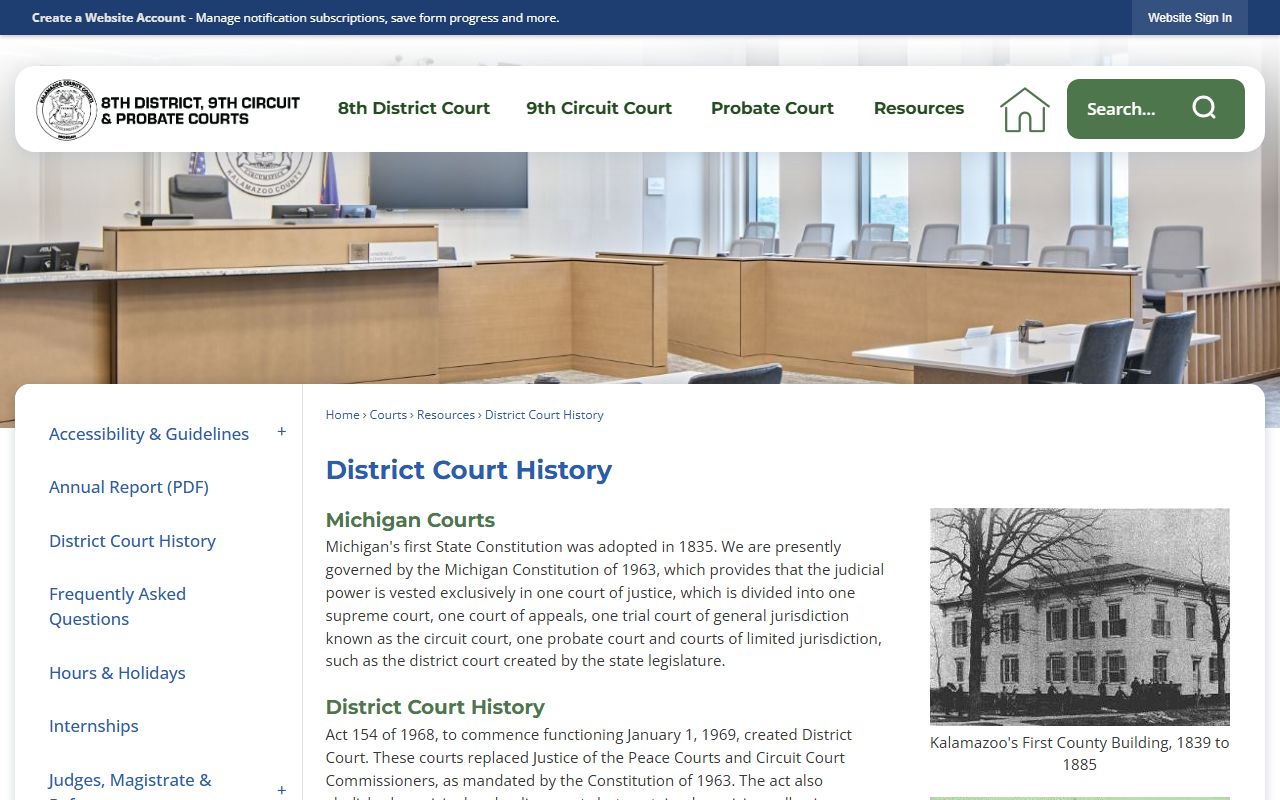
The history page explains why records for the same era may live in different buildings today. For copies of case files and certified documents from any of these courts, the Kalamazoo County Clerk of Court handles the request windows and forms.