
What Is a Court Docket in Kalamazoo County
A court docket is a dated list of every step in a case. Each time a party files a paper, a judge signs an order, or a hearing is set, the clerk adds a new line to the docket. In Kalamazoo County, both the 8th District Court and the 9th Circuit Court build a docket for every case they open. The docket is the map of the case. It tells you when the case started, what has happened since, and what is scheduled next.
The docket is not the same thing as the full case file. A docket line might read "Motion filed" or "Order entered," but the docket does not hold the text of that motion or order. The written documents sit in the case file, which the clerk keeps at the courthouse. Think of the docket as the index and the case file as the book behind it.
Docket depth changes with the court and the case type. A district traffic or misdemeanor docket may run only a few lines. A circuit felony or civil docket can hold dozens of entries across arraignment, motions, pretrial dates, trial, and disposition. Probate dockets follow their own path, with petitions, letters of authority, and accountings.
How to Find Kalamazoo County Dockets Online
Most state trial dockets in the county run through the Michigan judiciary case search tool. The 8th District Court entry point is the Michigan courts case search for the 8th District, and the same statewide system reaches other court levels. The tool is built to work best when you already have a case number or a full, correctly spelled party name. Broad or partial searches often fail to return a match.
- Open the Michigan case search portal and choose the Kalamazoo County court you need, such as the 8th District Court.
- Select the case type or court division so the search runs against the right set of records.
- Enter the case number if you have it, or type the full party name with exact spelling and a date range.
- Open the matching case and read the docket entries in date order, from the opening filing to the latest event.
If only a citation number is on the paper in your hand, save it. You can carry that number to the clerk for a copy request when the online tool does not surface the record. When a search returns nothing, check the spelling, widen the date window, and confirm you picked the correct court before you conclude the case is not in the system.
Sample Kalamazoo County Docket Entry
Each docket entry carries a small set of fields that repeat down the page. Once you learn what those fields mean, a Kalamazoo County docket becomes easy to read at a glance. The table below breaks down the core fields you will meet on a district or circuit docket and what each one tells you about the case.
| Field | What It Shows |
|---|---|
| Case Number | The unique court identifier that groups every entry for one case under a single docket. |
| Filing Date | The date a paper was filed or an event was logged, which sets the order of the docket. |
| Parties | The people or entities in the case, such as plaintiff and defendant, or the estate and respondent. |
| Motion / Hearing Entries | Lines for each motion filed and each hearing set, held, or adjourned as the case moves. |
| Order | A line marking a ruling the judge signed, with the written order kept in the case file. |
| Disposition | The outcome of the case, such as a plea, judgment, dismissal, or sentence. |
Not every docket uses every field on every line. A hearing entry may skip the order column until a judge rules, and the disposition line appears only once the case closes. Reading the fields together, in date order, gives you the full arc of the case.
Courts That Publish Dockets in Kalamazoo County
Kalamazoo County runs a layered trial system, and each court builds its own dockets. The 8th District Court handles misdemeanors, the early phase of felony cases, lower-dollar civil claims, and traffic matters. The 9th Circuit Court handles felonies, larger civil actions, family and juvenile cases, and appeals from lower courts. The Probate Court, now paired with a Civil/Probate Division, keeps dockets for estates, guardianships, conservatorships, and mental-health proceedings.
- 8th District Court, reached through the Michigan case search tool, for misdemeanor, traffic, and lower civil dockets.
- 9th Circuit Court, also on the statewide search system, for felony, higher civil, and family dockets.
- Kalamazoo County Probate Court Index for probate filing visibility, including active and closed estate and guardianship files.
Coverage online is not total. Municipal and local justice venues that handle city-level traffic and minor misdemeanors are not always folded into the central court portals. Older probate files may exist only on microfilm and require an in-office retrieval. When a docket does not appear online, the clerk record-request path fills the gap. The full spread of case types, from criminal to family, is described in the county court records overview.
Federal Court Dockets for Kalamazoo Cases
Not every case tied to Kalamazoo lives in the county system. Federal crimes, federal civil rights suits, bankruptcy filings, and other federal statutory claims are heard in the U.S. District Court for the Western District of Michigan. These cases never appear on the county portal, so a search for them there will always come back empty. You can preview the federal court and its role at the Western District of Michigan site before you look up a docket.
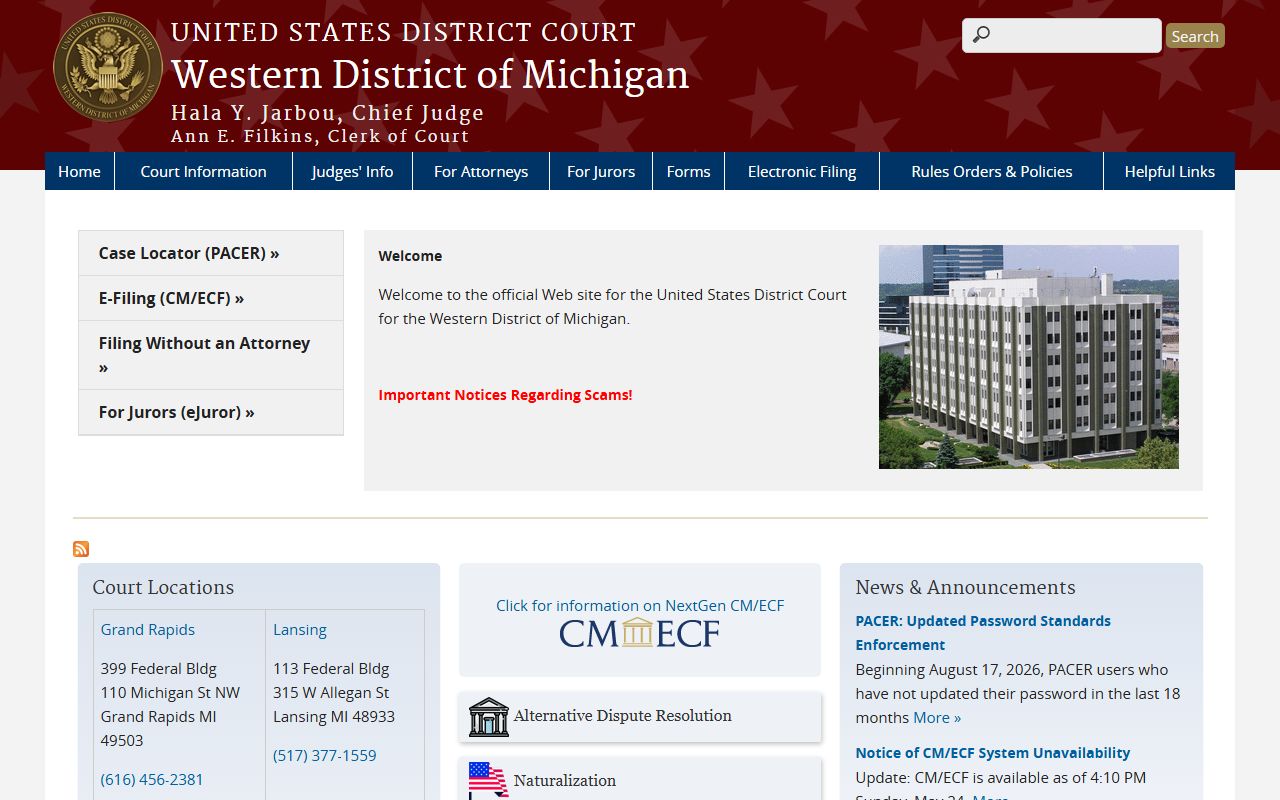
The Western District holds court at a Kalamazoo courthouse, so local federal filings are handled close to home rather than shipped out of the region. The federal courthouse sits at 410 W. Michigan Ave, Kalamazoo, MI 49007, and the court can be reached at (269) 337-5706. The court publishes its venue and building details on its own pages.
The Western District court locations page confirms where the Kalamazoo federal courthouse stands and how it fits among the district's other sites.
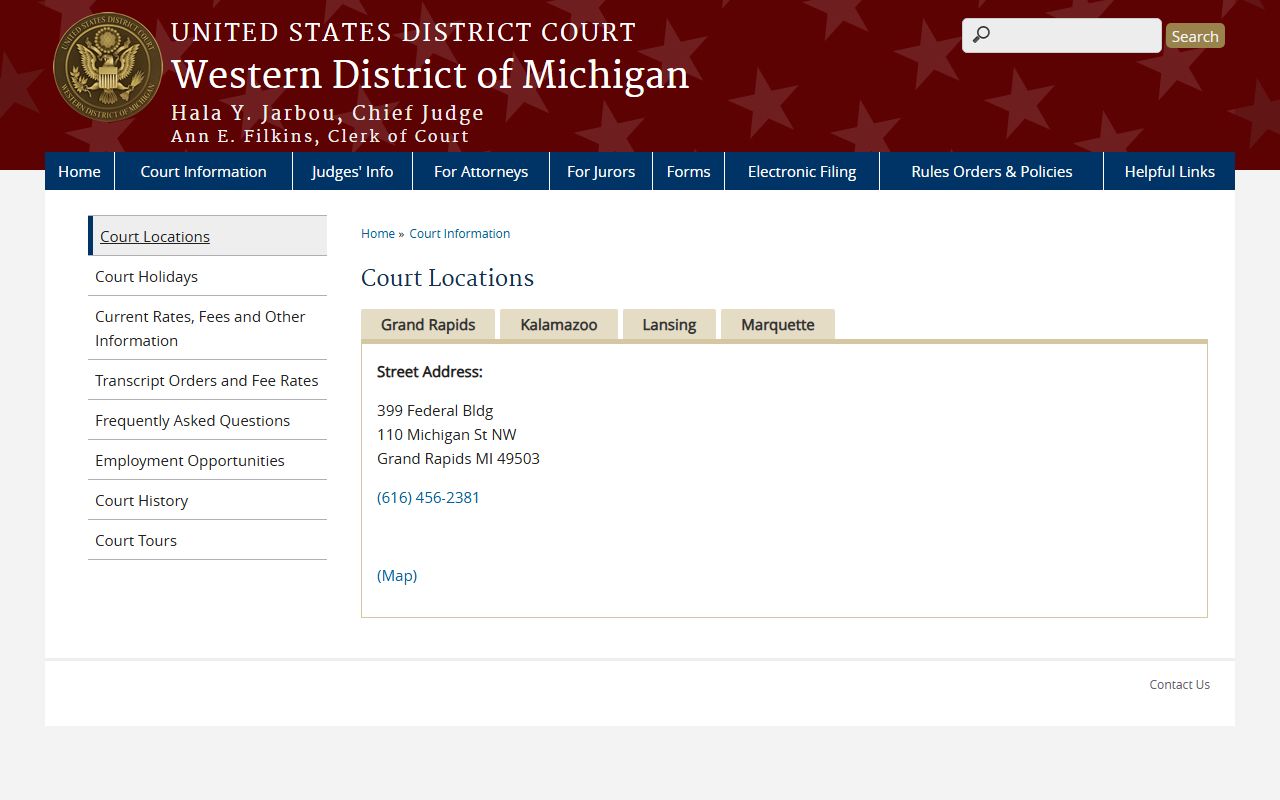
When you need to reach the court about a filing or a docket question, the clerk's office lists its phone and mail channels online. Those contacts help when a federal docket entry is unclear or when you need to order a certified copy of a federal record.
The Western District contact page gathers the clerk's office phone, address, and email channels in one place.
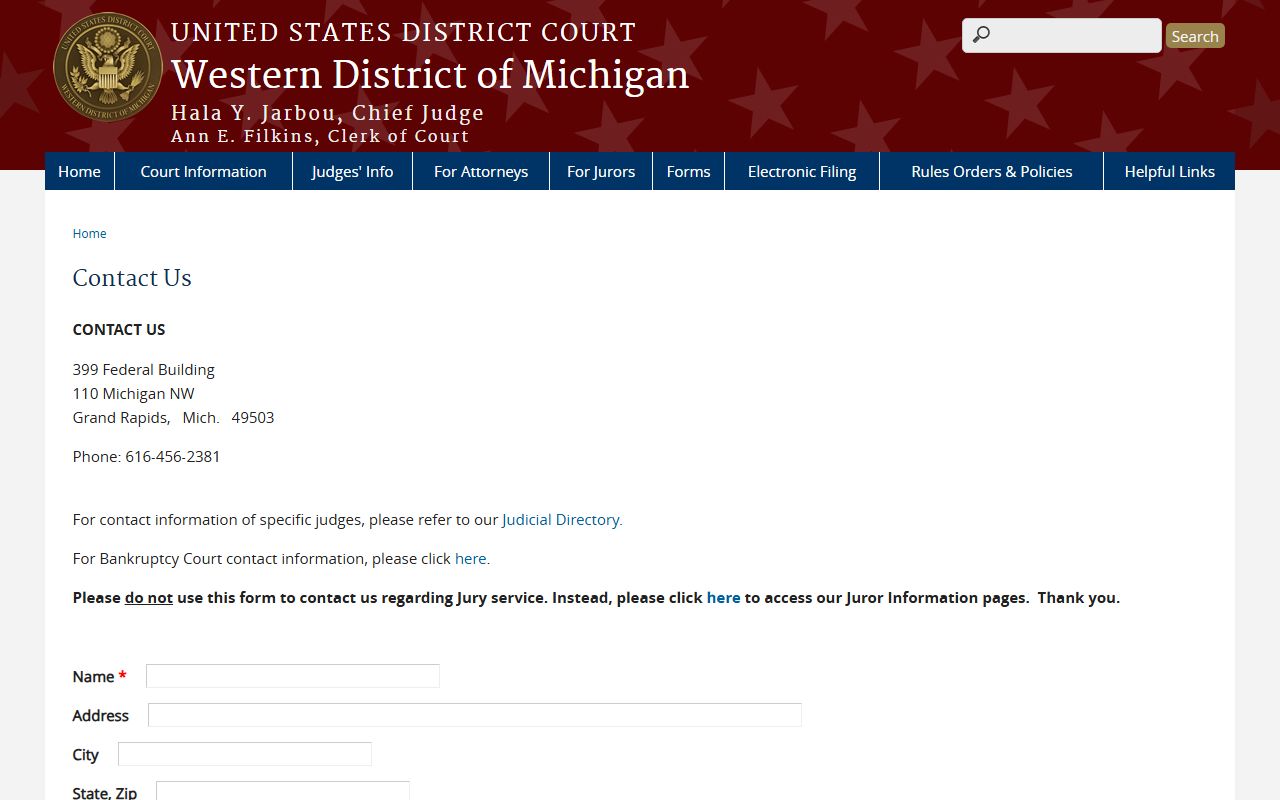
Federal dockets themselves are searched through PACER, the Public Access to Court Electronic Records system, and its CM/ECF case tool. Civil and criminal Kalamazoo-area cases in the Western District use the MIWDC court code. You register with PACER, then run a case or party search that returns the docket sheet and links to filed documents.
The PACER lookup for the Western District civil and criminal court is the entry point for those federal dockets.
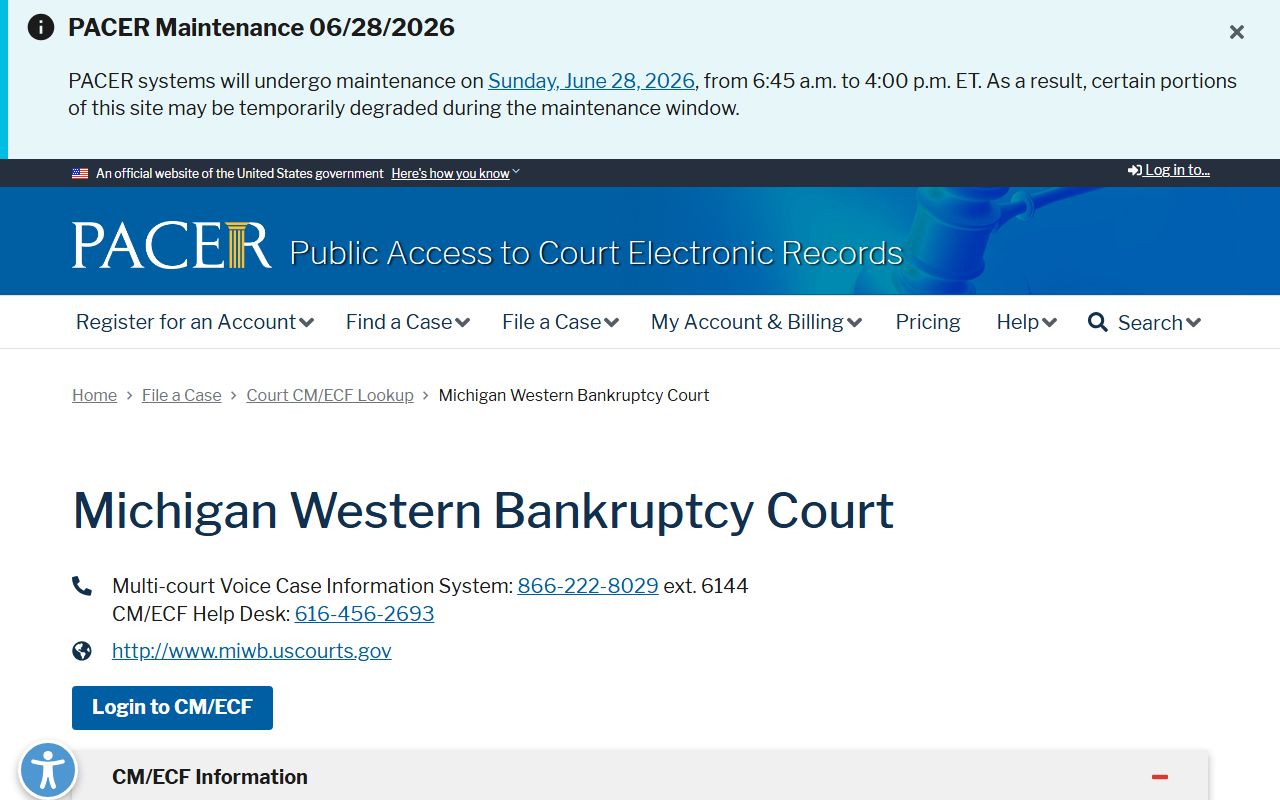
Bankruptcy cases run on a separate federal track with its own court code, MIWBK. A person or business filing for bankruptcy in the Western District builds a docket that a creditor, party, or researcher can pull through PACER. The bankruptcy division also carries a Grand Rapids regional reference for some filings.
The PACER lookup for Western District bankruptcy cases reaches those dockets.
Note: PACER charges standard federal search and document fees, and appeals from the Western District move to the United States Court of Appeals for the Sixth Circuit.
Docket vs. Full Case Record
People often ask for a docket when they really want the whole file, or the reverse. The two products serve different needs. A docket answers the question of what has happened and what is next. A full case record answers the question of what a document actually says. The table below sets the two side by side so you can pick the right request.
| Docket | Full Case Record | |
|---|---|---|
| Format | List of dated entries | The full filed documents |
| Access | Often online through the case search tool | May need a copy request or a courthouse visit |
| Use | Track case progress and dates | Legal review, evidence, and certified copies |
For a legal proceeding, a docket line is rarely enough. If you need the text of an order, a signed judgment, or a filed motion, you order the document from the clerk. The Court Record Copy Request Form is the standard route to pull those papers from the case file, and the clerk lists a processing window of roughly five to seven days.
Docket Access Rules Under Michigan Court Rules
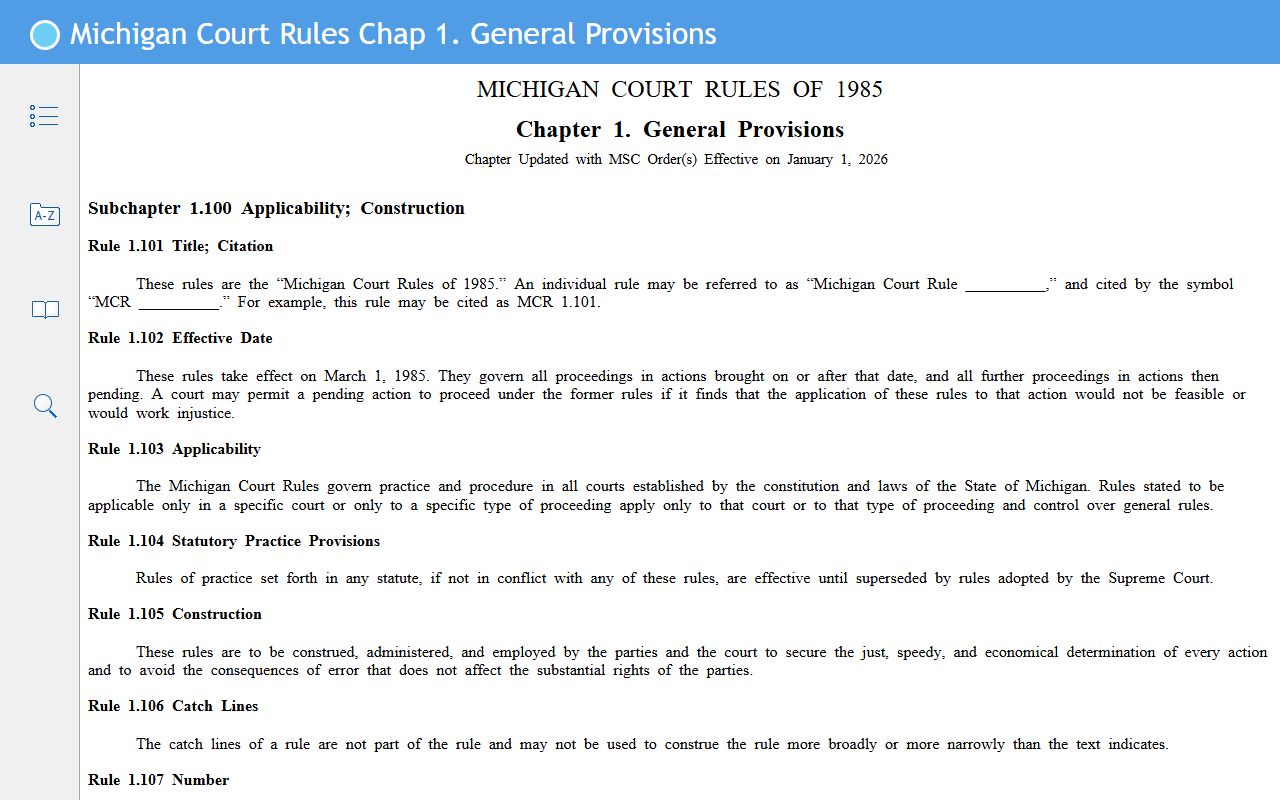
Court dockets in Michigan start from a rule of open access. The Michigan Court Rules treat court records as presumptively public unless a seal, a confidentiality statute, or a specific exception applies. Chapter 1 of the rules sets the framework for public access and how the courts manage the records they hold. The Michigan Court Rules chapter 1 spells out those access principles.
State law reinforces the same idea. The Michigan public records act frames the general right to inspect and request non-exempt records held by public offices. Some docket categories fall outside that open rule. Juvenile matters carry confidentiality protection, sealed and expunged files are removed from public view by court order, and mental-health proceedings routed through the Probate Court are held to privacy standards. Personal identifiers such as Social Security and financial account numbers are commonly redacted from public docket extracts.
Because of these limits, a docket may show that a case exists while the underlying detail stays restricted. When that happens, the clerk decides release based on the statute that applies, and a sealed or juvenile record may require a court order before any copy is issued. The full path for reading criminal outcomes is covered on the county criminal court records page.
When Kalamazoo County Dockets Are Not Fully Online
The online tools do not reach every record. Older cases, historical probate files, and municipal traffic matters may not surface in the statewide search. Michigan's case search also leans hard on identifiers, so a lookup can stall when you do not have a case number or an exact party name. The county record-request path is the fallback for all of these gaps.
Important: A no-cost docket search and a certified copy are different services. The online docket is free to view, but a certified or full copy from the case file is ordered from the clerk and may carry a fee.
The county record-requests hub explains the methods, and the record check memorandum makes clear that a case number or party name speeds the search. To pull the papers behind a docket line, use the Court Record Copy Request Form, which lets you specify the case by number or by offense and date, and to name the parties involved. For a verbatim record of a hearing or trial, the Transcript Request Form is the separate channel.
The court front office at 330 Eleanor St. can be reached at 269-384-8171 for district and circuit record questions. Requests can move through in-person windows, mail, email, or phone, depending on the office. When even a records request cannot confirm a restricted item, the clerk evaluates eligibility under the governing statute before any release.
How to Read a Kalamazoo County Docket
Docket lines are short by design, and they lean on a handful of standard terms. Reading them is a matter of knowing the vocabulary. A few core terms cover most of what you will see on a district, circuit, or probate docket.
- Motion
- A formal request asking the court for a ruling or a procedural action.
- Hearing
- A scheduled court session, which the docket may later mark as held or adjourned.
- Order
- A ruling the judge signed, with the written text kept in the case file.
- Disposition
- The outcome of the case, such as a plea, judgment, dismissal, or sentence.
- Arraignment
- An early criminal appearance where charges are read and a plea is set.
Criminal dockets tend to run from arraignment through plea, motions, and sentencing. Civil dockets move from the complaint through motions, summary disposition, and final judgment. Probate dockets track petitions filed, letters issued, accountings, and notice periods. Read the entries top to bottom, watch for the disposition line, and note any entry that points to a document you may need to order in full.
When a docket entry raises a question you cannot answer from the line alone, the clerk is the right next stop. A short call or a copy request will usually settle what a coded entry means and whether the full document is public.