
What the Probate Court Handles in Kalamazoo County
The Kalamazoo County Probate Court deals with the legal steps that follow a death and with the protection of people who cannot fully manage their own lives. Its core work covers decedent estates, wills, and trusts. It also oversees guardianships for minors and adults, conservatorships over money and property, and mental-health commitment and transport orders. These are sensitive, high-stakes cases. A single estate file can decide who inherits a home, who pays a debt, and who speaks for a person who can no longer speak for themselves.
Court structure in the county shifted in 2025. The Circuit Court Civil Division was moved under the Probate Court to form a combined Civil/Probate Division. That means many civil matters and probate matters now share the same administrative home. For most families the day-to-day probate process did not change, but the reorganization affects how staff, records, and filing windows are grouped. An overview of the office and its role sits on the county page for the Kalamazoo County Probate Court. That page is a good starting point before you open a file or plan a visit.
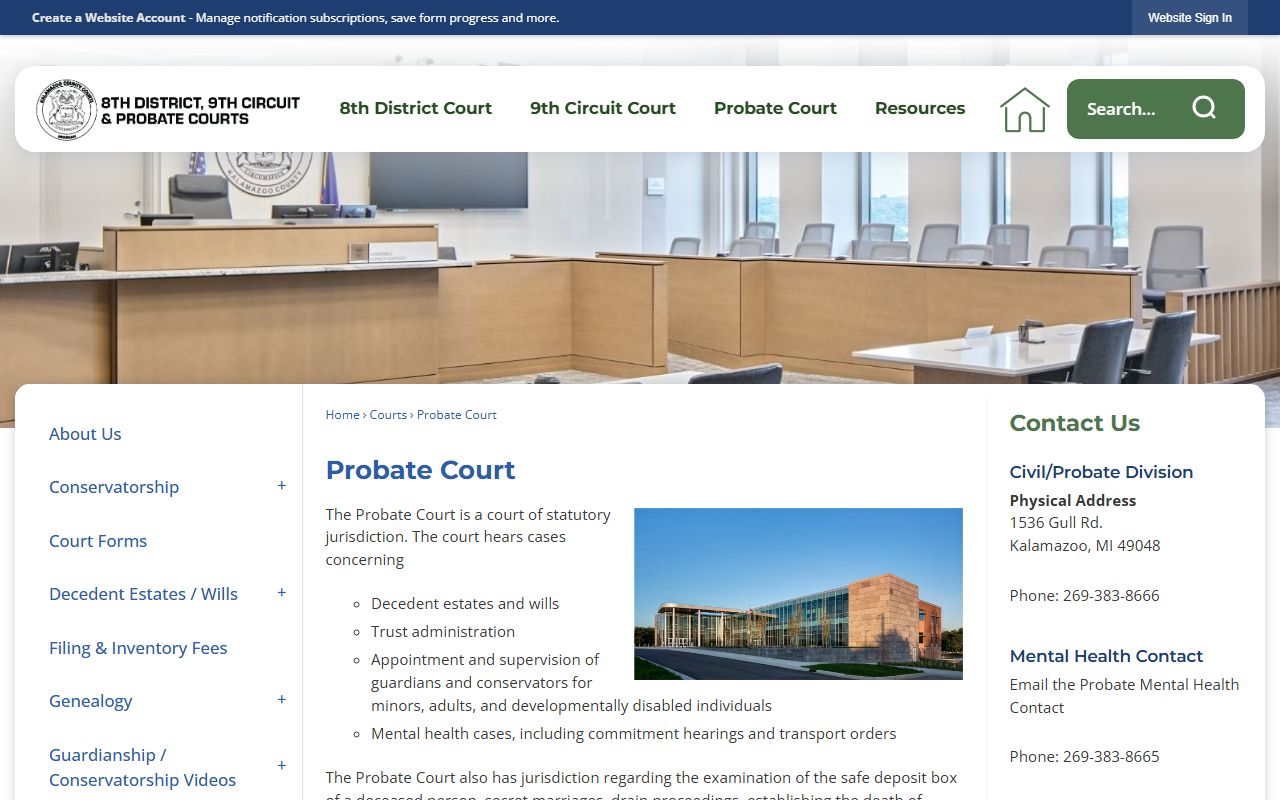
The reorganized Civil/Probate Division reflects a broader push to modernize how the county groups its courts. Details on the merged division, including which matters route through it, are posted on the county page for the Civil/Probate Division.
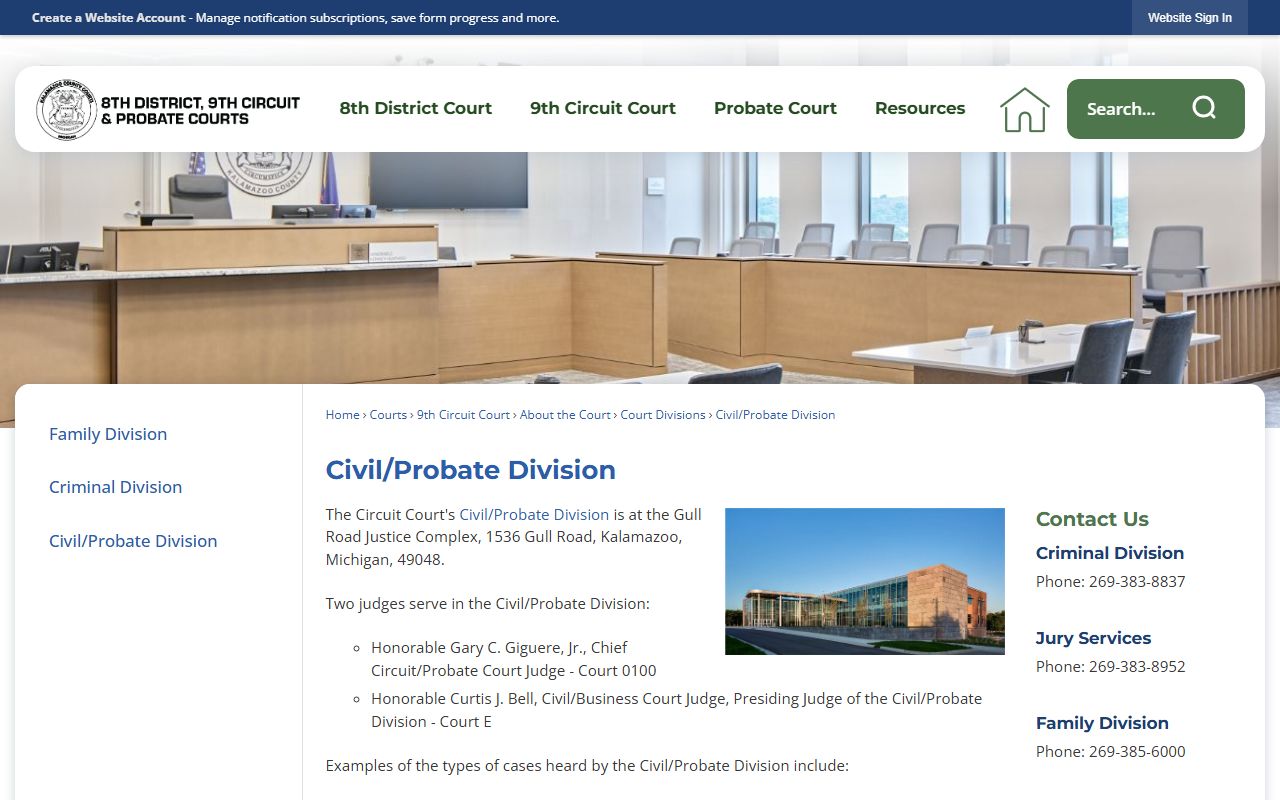
Because civil and probate matters now share this division, some case types that once sat squarely under the Circuit Court may be searched and filed through the same administrative channel.
Probate Terms Defined
Probate filings use words that rarely come up in daily life. A short glossary helps when you read an estate file or a guardianship petition. The terms below appear across most Kalamazoo County probate cases and shape who is in charge and who inherits.
- Testator
- The person who made the will. The document speaks for them after death and directs how their property is split.
- Executor
- The person named in the will to carry it out. In Michigan this role is often called a personal representative once the court makes the appointment.
- Intestate
- Dying without a valid will. When this happens, state law decides the order of heirs and how the estate is divided.
- Guardianship
- A court arrangement that gives one person legal authority to make personal and care decisions for a minor or an incapacitated adult.
- Conservatorship
- A court arrangement that puts one person in charge of another person's money, property, and financial affairs.
How to Search Kalamazoo County Probate Records
The main online tool for modern filings is the county probate index. It lists active and closed files and lets you confirm that a case exists before you request papers. Active and closed files are tracked separately, so knowing whether a matter is open or resolved helps you look in the right place. You can reach the search tool on the county page for the Probate Court Index.
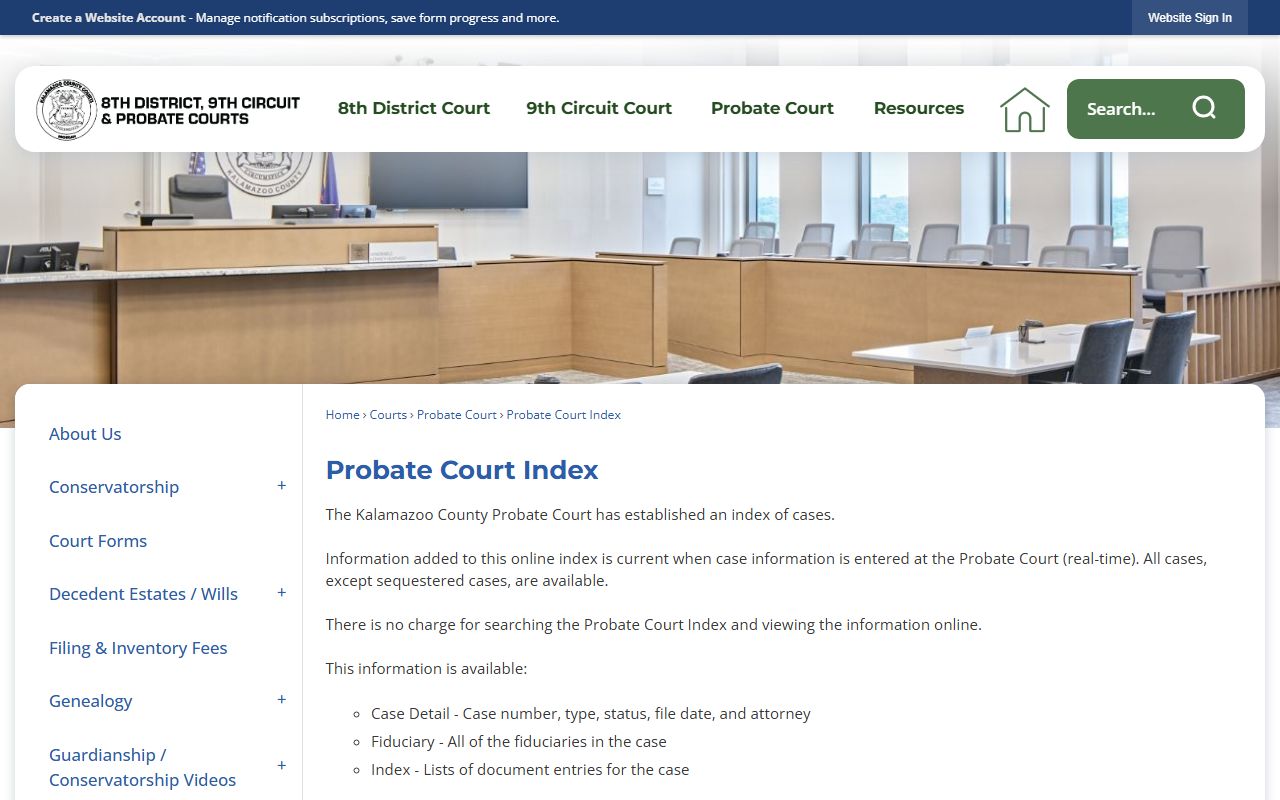
That index is the fastest way to discover recent cases and case numbers. Once you have a case number, you can ask the court for the specific documents you need. The steps below outline a typical search.
- Open the county Probate Court Index and choose the active or closed file listing that fits your matter.
- Search by the name of the deceased, the ward, or the estate, and note the case number that comes back.
- Contact the probate office with that case number to confirm the file location and request copies, or plan an in-person visit for older archives.
Note: Active files are added to the index even when the historical record window predates 1995, so a modern case can point back to much older family filings.
The Kalamazoo County Probate Court Office
The Probate Court and the Civil/Probate Division are housed at the Gull Road Justice Complex. This is where estate, guardianship, and conservatorship files are opened and where staff answer filing and filing-window questions. Call ahead if you have a case number and want to confirm that a file is available before you drive out. The contact block below lists the office, its hours, and the direct phone line.
Kalamazoo County Probate Court
Gull Road Justice Complex
1536 Gull Rd.
Kalamazoo, MI 49048
269-383-8666
Mon to Fri, 8:00 AM to 5:00 PM
The Gull Road complex also holds the 9th Circuit Family Division, so probate and family matters are often handled at the same site. If your visit involves both a guardianship and a related family case, plan for the fact that they share the complex but may sit with different divisions.
Online Index vs In-Person Record Retrieval
Kalamazoo County offers two main channels for probate records, and older cases often force you to use the second one. The online index is the primary route for modern filing discovery. It is fast, it is free to browse, and it works well for cases opened in recent years. For historical files the picture changes. Older records are held on microfilm, and physical archives require the office retrieval path rather than a web search.
This split matters most for genealogy and old estate research. If you are chasing a will from decades ago, the index may show only a pointer or nothing at all, and the actual document may live on film at the courthouse. In those cases the office staff at the Gull Road complex can tell you what survives and how to view or copy it. Background on estate and will procedures is posted on the county page for Decedent Estates and Wills, which is a useful primer before you call.
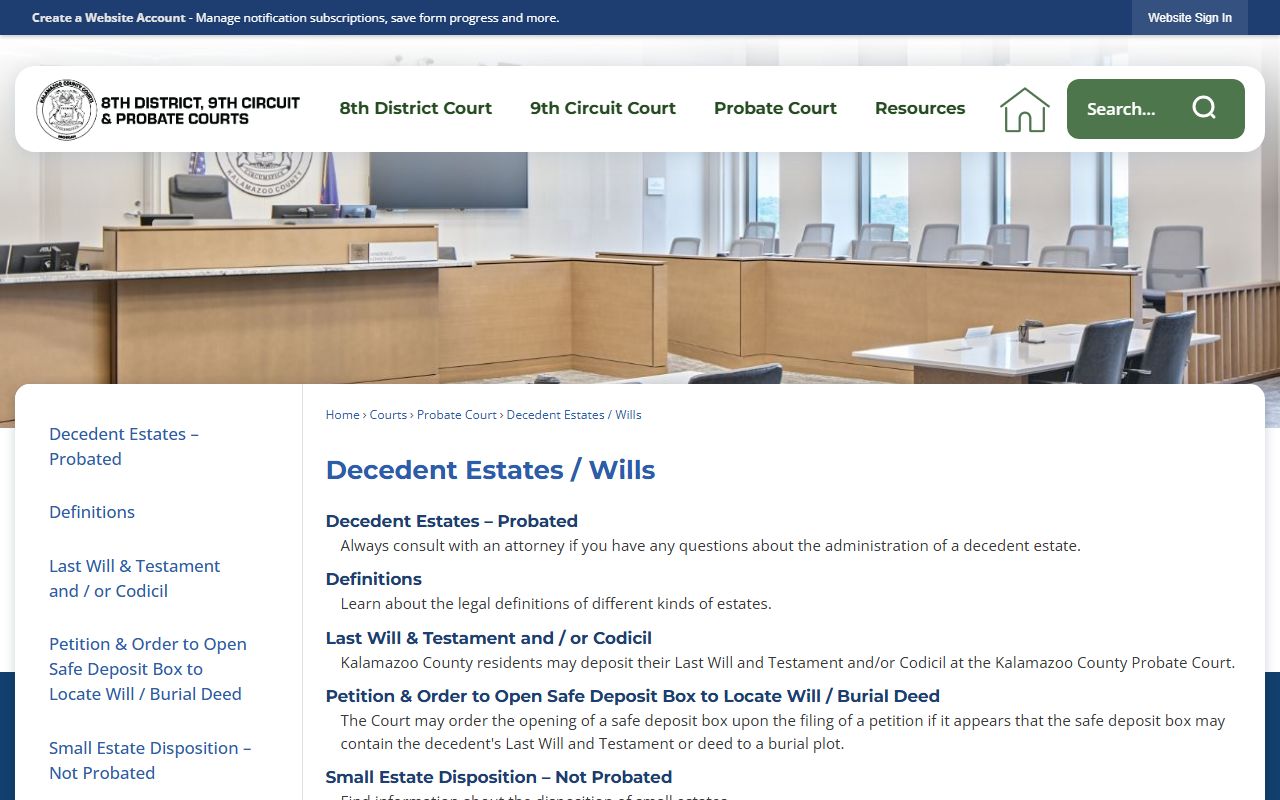
Reading that estate and will guidance first helps you frame the right question when you reach the office. It also spells out the standard flow of an estate case, from opening the file to closing it out.
Fees for Probate Record Copies
Getting a plain look at a file and getting a copy you can use in a legal setting are two different things. Certified copies carry a fee, and courts and offices in the county follow the standard certified-copy schedule. The table below shows the certified-copy pricing you should expect for a probate document.
| Item | Amount |
|---|---|
| Certified copy of a record (first copy) | $20 |
| Each additional certified copy (same request) | $7 |
Statutory filing fees for opening an estate, appointing a personal representative, or starting a guardianship are set by Michigan law and confirmed at the filing window. Because those amounts depend on the type of case and can change, verify the current figure with the probate office before you file. Staff at the Gull Road complex can quote the exact fee for your matter when you call.
Note: Uncertified printouts from an online index are not the same as certified copies and may not be accepted for legal or estate-settlement purposes.
What Kalamazoo County Probate Records Show
A probate file grows as the case moves. It usually starts with a petition or application and, in a testate estate, the will itself. From there it can build to include the order that appoints a personal representative, the inventory of the estate's assets, accountings that track money in and out, and the final orders that distribute property to heirs. Guardianship and conservatorship files add petitions, medical or capacity information, and reports filed by the guardian or conservator.
These records answer real questions. Who was named to run the estate? What did the estate own? Was there a will, and what did it say? Who received what in the end? For creditors, the file shows the notice steps and the window to make a claim. For heirs, it shows the appointment and the distribution. Estate administration, appointment, and creditor or party notice steps follow standard probate flow, and the county's estate education pages walk through each stage.
Probate files often connect to other county records. A death that triggers an estate may also involve marriage or divorce history, which is covered on the county marriage and divorce records page. Certified vital records and other official copies tied to an estate route through the county Clerk of Court and register offices.
Restricted Probate Records
Not every probate document is open to the public. Mental-health commitment records are among the most protected files the court handles, and access is tightly limited. Guardianship files that involve minors can carry sealed or restricted portions to shield a child's personal information. Some medical and capacity records inside an adult guardianship or conservatorship are also withheld from general view.
When a portion of a file is restricted, the office will tell you what is releasable and what is not. In many cases the docket and basic case information stay public even when the underlying medical or personal details are sealed. If you are a party, an heir, or an attorney of record, you may have wider access than a member of the general public. The staff at the Gull Road complex can confirm your standing and explain what you are entitled to view before you request copies.