
Checking for a Warrant in Kalamazoo County
There is no dedicated county public warrant search portal in Kalamazoo County. No confirmed app performs an active warrant search either. That means the honest answer to "how do I check for a warrant in Kalamazoo County" is a fallback chain, not a website. A person works down a set of official channels until one of them confirms the status.
The chain has five links. First, check the court case record through the state case search for the 8th District Court. Second, contact the 8th District Court Clerk window for bench warrants tied to a missed court date. Third, reach the criminal division or the prosecuting attorney for charging and warrant questions. Fourth, call the Sheriff's Office if the concern is current detention or an active pickup. Fifth, file a formal records request when the warrant details are not shown through any front-facing system.
Most people can start the whole process by phone or email. The general county contact directory lists the office numbers and email routes that connect to the court, the clerk, and the sheriff. A short list of the county contact channels is published at the Kalamazoo County contact page, which gives the correct department before a person walks into a courthouse.
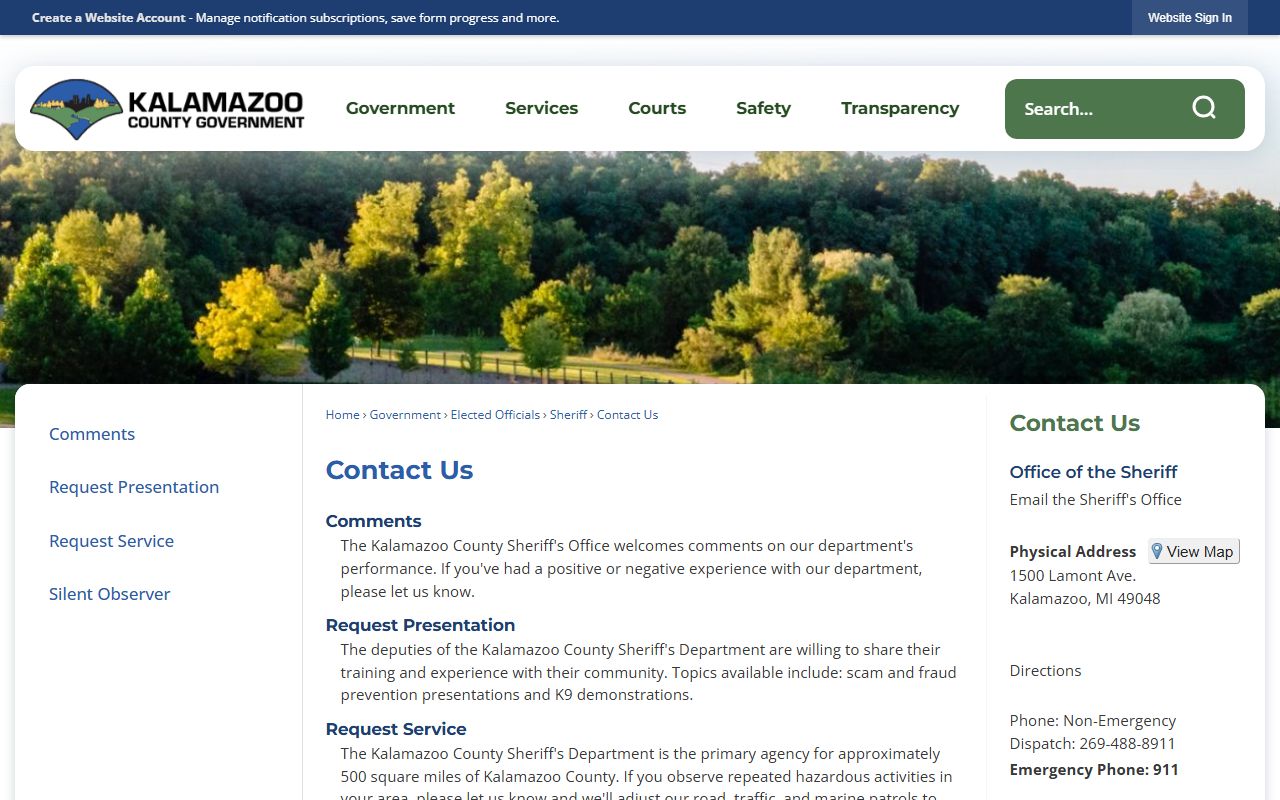
Using the directory keeps a warrant question with the office that actually holds the answer, which matters when no single database exists. It also helps a caller avoid the sheriff line for a court clerk question, or the clerk window for a detention question.
How to Check for a Warrant
Because there is no online warrant lookup, the check follows a set order. Each step either resolves the question or points to the next office. Court records are the best first move, since a warrant almost always attaches to an open case.
- Open the 8th District Court case search and look up the case by full name or case number to see whether a bench warrant or capias entry appears on the docket.
- Call or visit the 8th District Court Clerk window at 330 Eleanor St. to confirm a bench warrant from a missed appearance and to ask how it can be cleared.
- Contact the criminal division or the Kalamazoo County Prosecuting Attorney for questions about a charge-based arrest warrant.
- Reach the Kalamazoo County Sheriff's Office non-emergency line when the concern is a current arrest, pickup, or detention status.
- Submit a formal records request for warrant metadata when the item is not visible through the case search or the front counters.
A case number speeds every step. The court staff repeatedly ask for a case number or a full party name, and older items that never went online may only surface through a clerk copy request. When a person cannot supply an identifier, the public check may not complete on its own.
Bench Warrants and Missed Court Dates
A bench warrant is the most common warrant a resident runs into, and it usually comes from a missed hearing rather than a new crime. When a defendant does not appear on a scheduled date, the judge can issue the warrant from the bench. The 8th District Court Clerk handles the intake for these missed-appearance warrants, and clearing one often starts at that same counter.
The traffic process shows how quickly a missed date turns into exposure. A driver who wants to contest a civil infraction files a denial of responsibility, which sets a hearing. Skipping that hearing is what triggers a bench warrant and added costs.
The county explains the denial and hearing steps on its Deny Responsibility workflow page, which is a useful reference for anyone weighing whether to appear.
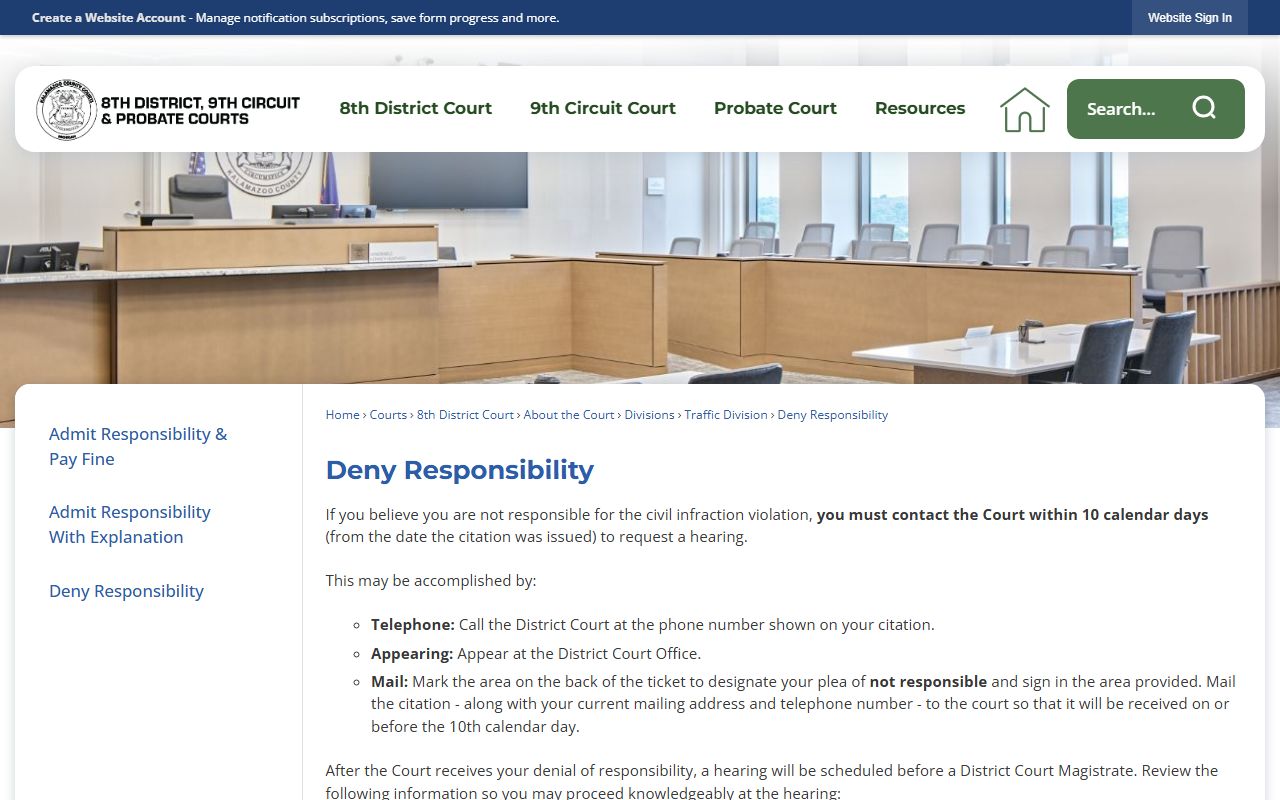
Reading that workflow makes the risk clear. The safest way to avoid a bench warrant is to keep the court date, and the fastest way to resolve one already issued is to contact the clerk and reschedule an appearance before an arrest occurs.
Types of Warrants in Kalamazoo County
Warrants come in a few forms, and the type controls where a person goes to check or resolve it. The two a resident meets most often are the bench warrant and the arrest warrant. Search warrants and capias orders show up inside active cases as well.
- Bench warrant - Issued by a judge when a person misses a required court appearance, and cleared through the district court clerk.
- Arrest warrant - Issued on a charge after review, authorizing law enforcement to take a named person into custody.
- Capias / failure-to-appear - A court order to bring a person before the court, often overlapping with a bench warrant on the docket.
- Search warrant - A judicial order to search a place or item, tied to an investigation rather than a public lookup.
Charge-based arrest warrants trace back to the prosecutor and the criminal division, while bench and capias entries sit with the court that set the missed date. That split is why a single search box could not cover them all even if one existed.
What a Kalamazoo County Warrant Record Shows
When a warrant does surface through a case record or a records request, it carries a predictable set of fields. Since no public warrant portal returns a sample result, the inventory below reflects the common data points drawn from the court case record and criminal filing labels used locally.
| Field | What It Shows |
|---|---|
| Case Number | The court case the warrant attaches to, used for every follow-up request. |
| Warrant Type | Whether the order is a bench warrant, arrest warrant, or capias. |
| Issue Date | The date the judge or court authorized the warrant. |
| Charge or Reason | The alleged offense or the missed-appearance basis for the order. |
| Issuing Court | The 8th District Court or 9th Circuit Court division that entered it. |
| Bond Amount | Any bond or security condition set for release. |
| Named Party | The person the warrant is directed at, with identifying details. |
Not every field appears in every extract, and personal identifiers such as full dates of birth may be limited. For the full charge, plea, and disposition picture behind a warrant, the linked case moves into the Kalamazoo County criminal court records, which hold the complete file once a case opens.
What to Do If You Have an Outstanding Warrant
An outstanding warrant does not go away on its own, and time usually makes it harder to resolve. The practical answer to "what to do if I have an outstanding warrant" is to face it in a planned way rather than wait for an arrest. Most warrants in Kalamazoo County resolve at the district court that issued them.
A common sequence works for many people. Confirm the warrant through the case record or the clerk. Arrange a lawyer before doing anything else, since an attorney can often coordinate a surrender or a hearing on better terms. Then plan to resolve the matter at the court and, when the warrant sets one, post bond.
- Verify the warrant and its issuing court through the case search or the clerk window.
- Contact a defense attorney, or the Kalamazoo Defender office if you may qualify for appointed counsel.
- Arrange to appear at the 8th District Court to address a bench warrant, or coordinate a turn-in for an arrest warrant.
- Be ready to post bond if the court sets a release condition.
Appointed counsel is assigned at arraignment and depends on financial qualification, so reaching the defender office early helps. Turning yourself in on your own schedule, with counsel arranged, is far less disruptive than a roadside arrest.
Important: Talk to a lawyer before you turn yourself in, because counsel can often arrange the surrender, the hearing, and the bond in one coordinated step.
Detention Status and the Sheriff's Office
When the real question is whether someone has already been picked up on a warrant, the Sheriff's Office is the office to call. The sheriff runs the county jail and can speak to current custody and pickup activity in a way the court clerk cannot. The non-emergency operations line is the right number for a status question that is not an emergency.
The jail information page and the sheriff area explain how custody, bond posting, and inmate contact work at 1500 Lamont Ave. If a person has been booked, their name and basic detail should appear through the county roster, which sits alongside the Kalamazoo County inmate records and the jail lookup tools.
Kalamazoo County Sheriff's Office
1500 Lamont Ave
Kalamazoo, MI 49008
Non-emergency: 269-488-8911
Emergency: 911
Sheriff staff cannot quash a court warrant or set a hearing, so a detention call still routes back to the court for resolution. The value of the call is confirming current status quickly when an arrest may already have happened.
Requesting Warrant Records Through FOIA
When a warrant is not visible through the case search or the front counters, a formal records request is the last link in the chain. Michigan's Freedom of Information Act sets the framework for inspecting and copying non-exempt public records held by county offices. A written request to the correct office asks for the specific warrant metadata a person needs.
The county describes its record request methods and a separate police records request channel for law-enforcement documents. The public records duty and its limits come from MCL 15.231, while the categories an office may withhold are listed in MCL 15.243.
Note: A records request may confirm eligibility or status, but a sealed or restricted warrant item can still require a court order before any office releases it.
Juvenile and Sealed Warrant Exceptions
Not every warrant record is open to the public. Juvenile matters carry stronger confidentiality than adult files, and the protections govern who may access or publish the information. Michigan sets those juvenile access limits in statute, so a request for a minor's warrant detail is handled differently from an adult check.
The juvenile confidentiality baseline is stated in MCL 712A.28, which identifies the restrictions on releasing juvenile court information.
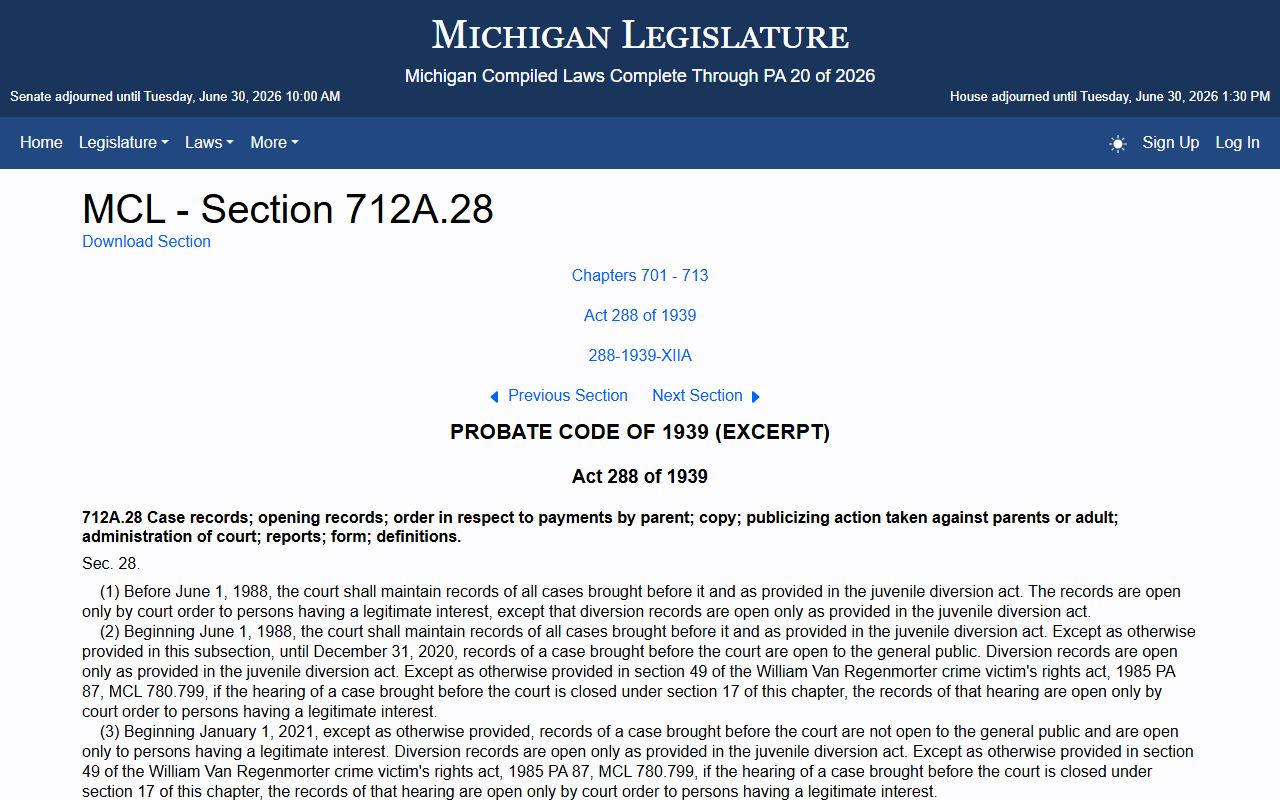
That statute is why a juvenile warrant question routes through the family division rather than a public counter. Adult records can also close over time when a person sets aside a conviction, which affects the visibility of the related case and any warrant history in it.
Michigan's set-aside framework begins at MCL 780.621 and continues through supporting subsections. One of those subsections, MCL 780.621b, addresses eligibility and process details for setting aside qualifying records.
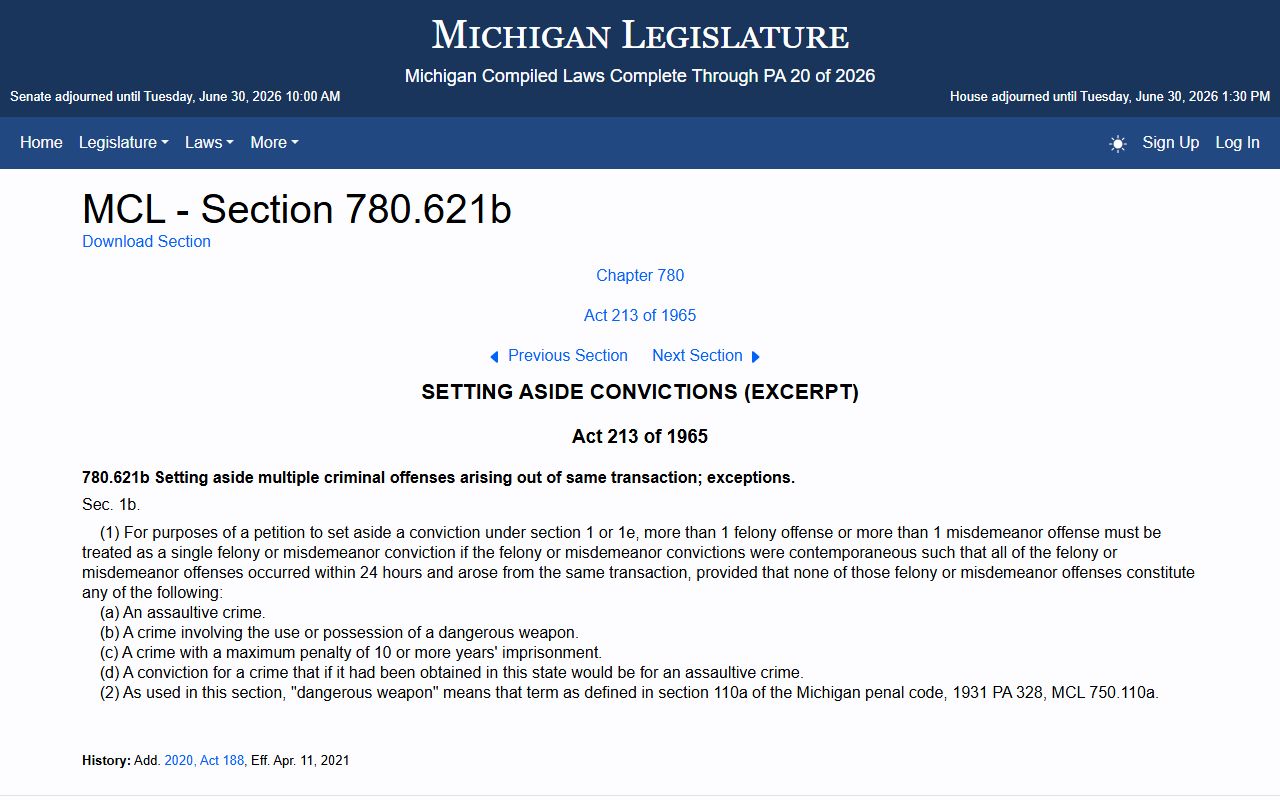
A companion subsection carries the effects of a set-aside once a court grants it. The text at MCL 780.621c covers further conditions and downstream effects for sealed files.
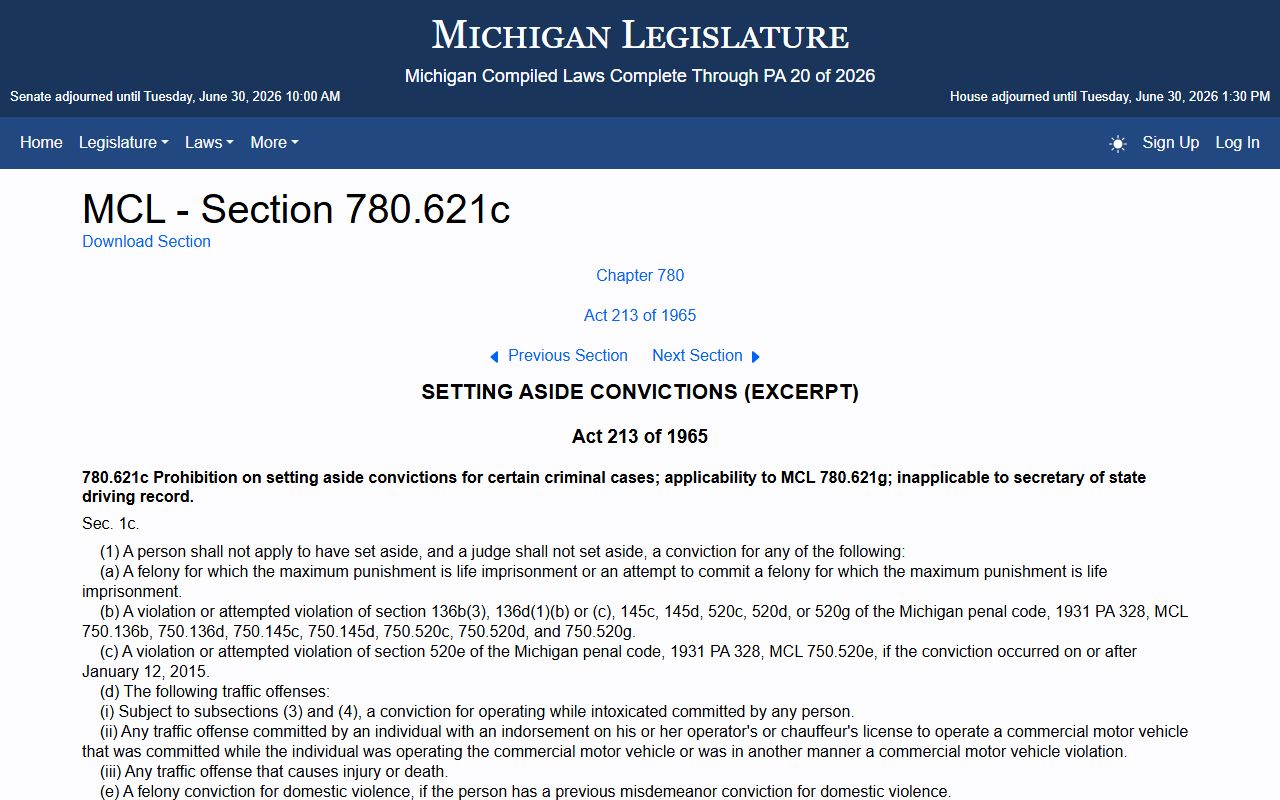
Reading both subsections together shows how a granted set-aside limits later public view of the case. Sealed, juvenile, and set-aside items sit outside the ordinary warrant check, and a court must evaluate statutory eligibility before any release.